
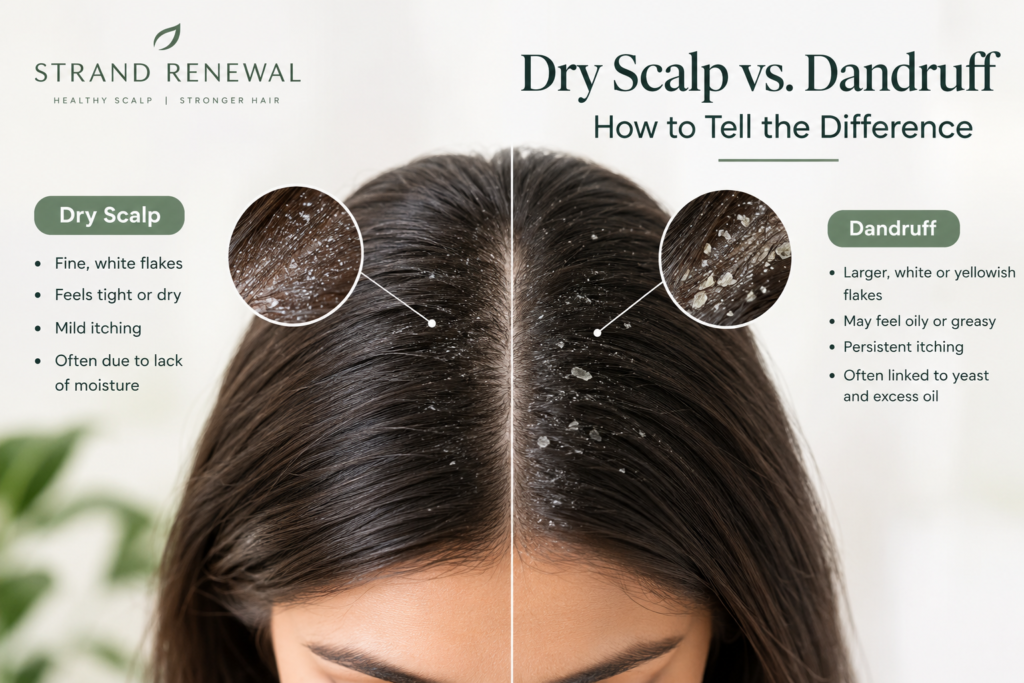
Dry Scalp vs Dandruff: How to Tell the Difference
Dry Scalp vs Dandruff: Have you ever noticed white flakes on your shoulders and wondered whether you have a dry scalp or dandruff? You are not alone. Many people experience scalp flaking, itching, and discomfort, but the reason behind these symptoms can be different. Although dry scalp and dandruff may look similar, they are not the same condition. Understanding the difference is the first step towards choosing the right hair care routine. In this guide, we will explain how to identify dry scalp and dandruff, what causes them, how to manage each condition, and when to consult a dermatologist. Table of Contents What Is a Dry Scalp? What Is Dandruff? Dry Scalp vs Dandruff: Key Differences Common Causes of Dry Scalp and Dandruff How to Treat a Dry Scalp How to Manage Dandruff When Should You See a Dermatologist? Frequently Asked Questions 1. What Is a Dry Scalp? A dry scalp occurs when the skin on your scalp loses moisture. When the scalp becomes dry, the skin may flake, feel tight, or become irritated. Common signs of a dry scalp include: Small, white flakes that fall easily from the scalp. A feeling of tightness or dryness. Mild itching or irritation. Rough or dry skin around the hairline. Symptoms that become worse during cold weather or after using harsh hair care products. 2. What Is Dandruff? Dandruff is a common scalp condition characterised by visible flakes and itching. It is often associated with Malassezia, a naturally occurring yeast that lives on the scalp. In susceptible individuals, this yeast can contribute to irritation and increased skin cell shedding. Unlike a dry scalp, dandruff is not simply caused by a lack of moisture. It is often linked to scalp oil, individual skin sensitivity, and the way the scalp responds to the yeast. Common signs of dandruff include: White or yellowish flakes. An itchy scalp. Flakes that may appear oily or larger than those associated with dry skin. Greasy patches or scales on the scalp. Symptoms that return even after regular hair washing. 3. Dry Scalp vs Dandruff: Key Differences Feature Dry Scalp Dandruff Main concern Lack of moisture Excessive flaking linked to scalp inflammation and yeast Flake appearance Usually small, fine, white Often larger, white or yellowish Scalp condition May feel tight or dry May appear oily or greasy Itching Common, often mild Common and sometimes persistent Common triggers Harsh shampoos, cold weather, hot water Scalp oil, yeast activity, individual sensitivity Helpful approach Gentle cleansing and moisturizing care Medicated anti-dandruff shampoo These differences are useful clues, but they are not definitive. Dry scalp and dandruff can sometimes overlap, so persistent symptoms may require professional assessment. 4. Common Causes of Dry Scalp vs Dandruff Causes of dry scalp A dry scalp may develop due to several factors: Harsh shampoos: Strong cleansers can strip away natural oils. Frequent hair washing: Washing too often may worsen dryness in some people. Hot water: Very hot showers can aggravate skin dryness. Cold or dry weather: Environmental conditions may reduce skin comfort. Hair care products: Fragrances, dyes, or other ingredients may irritate sensitive skin. Causes of dandruff Dandruff may be associated with: Malassezia yeast: Its activity can contribute to flaking in susceptible people. Excess scalp oil: An oily scalp can support conditions associated with dandruff. Skin sensitivity: Individual responses to yeast and other scalp factors vary. Seborrhoeic dermatitis: This inflammatory condition can cause persistent flakes and greasy scales. Stress and environmental changes: These may worsen symptoms in some individuals. 5. How to Treat a Dry Scalp If your scalp feels dry, tight, and uncomfortable, focus on restoring comfort and avoiding further irritation. Try these practical steps: Choose a gentle shampoo suited to your scalp. Wash with lukewarm rather than hot water. Avoid excessive washing if it worsens your dryness. Use a lightweight, scalp-compatible moisturising product if needed. Limit products that cause burning, itching, or irritation. Avoid applying heavy oils automatically. Although oils may improve dryness for some people, they can aggravate symptoms in others, particularly when dandruff is also present. 6. How to Manage Dandruff Dandruff often responds well to an appropriate anti-dandruff shampoo. Look for products containing recognized active ingredients, such as: Ketoconazole: Helps control Malassezia yeast. Zinc pyrithione: Helps manage dandruff where available and permitted. Selenium sulphide: Helps reduce flaking associated with dandruff. Salicylic acid: Helps loosen and remove accumulated scales. Follow the product label, including how long the shampoo should remain on your scalp before rinsing. Some treatments work best when used consistently for several weeks. If one product causes irritation or fails to improve your symptoms, seek advice from a pharmacist or dermatologist before trying multiple treatments. 7. When Should You See a Dermatologist? Occasional scalp flakes are common, but certain symptoms deserve professional attention. Consult a dermatologist if you experience: Persistent or severe itching. Redness, swelling, or painful patches. Thick scales or crusting. Bleeding, sores, or signs of infection. Hair loss or broken hairs associated with scalp symptoms. Flaking that does not improve with appropriate care. Conditions such as psoriasis, eczema, contact dermatitis, and fungal infections can sometimes resemble dandruff. A dermatologist can help identify the underlying cause and recommend suitable treatment. 8. Frequently Asked Questions Q1. How can I tell if I have a dry scalp or dandruff? A dry scalp often produces fine, white flakes with a feeling of tightness. Dandruff may cause larger or greasy flakes and persistent itching. However, symptoms overlap, so these signs alone cannot confirm the cause. Q2. Can a dry scalp cause hair fall? A dry scalp does not usually cause significant hair loss directly. However, irritation and repeated scratching may contribute to hair breakage. If you notice excessive shedding or bald patches, consult a dermatologist. Q3. Should I apply oil to a flaky scalp? Not always. Some oils may help relieve dryness, but heavy oils can worsen symptoms for certain people with dandruff. Choose scalp care according to the underlying cause. Q4. Is dandruff caused by poor hygiene? No. Dandruff is not simply a result […]